How to Get Rid of Acne Naturally: Evidence-Based Tips for Teens
Gentle skincare, smart nutrition, and proven natural ingredients—no harsh gimmicks.
1) Start with Gentle, Consistent Skincare
When it comes to natural acne care, less is often more. Harsh scrubs or strong chemicals can strip your skin’s barrier and make acne worse.- Cleanse twice daily with a mild, fragrance-free cleanser.
- Avoid over-washing—dry, tight skin can trigger more oil.
- Skip gritty scrubs; use fingertips or a soft cloth.
- Moisturize even if you’re oily—choose lightweight, non-comedogenic formulas.
2) Manage Oil Naturally
Excess oil (sebum) drives many breakouts. You can help regulate shine naturally:- Green tea extract (topical) may reduce oil and calm redness.
- Clay masks (kaolin or bentonite) 1×/week safely absorb excess oil.
- Blotting papers are a simple, product-free way to de-shine during the day.
3) Food & Acne: What the Science Says
Food doesn’t “cause” acne by itself, but research suggests some patterns can worsen breakouts in certain people:- High-glycemic foods (sugary drinks, chips, white bread) can spike insulin and oil production.
- Dairy, especially skim milk, is linked to acne in some studies.

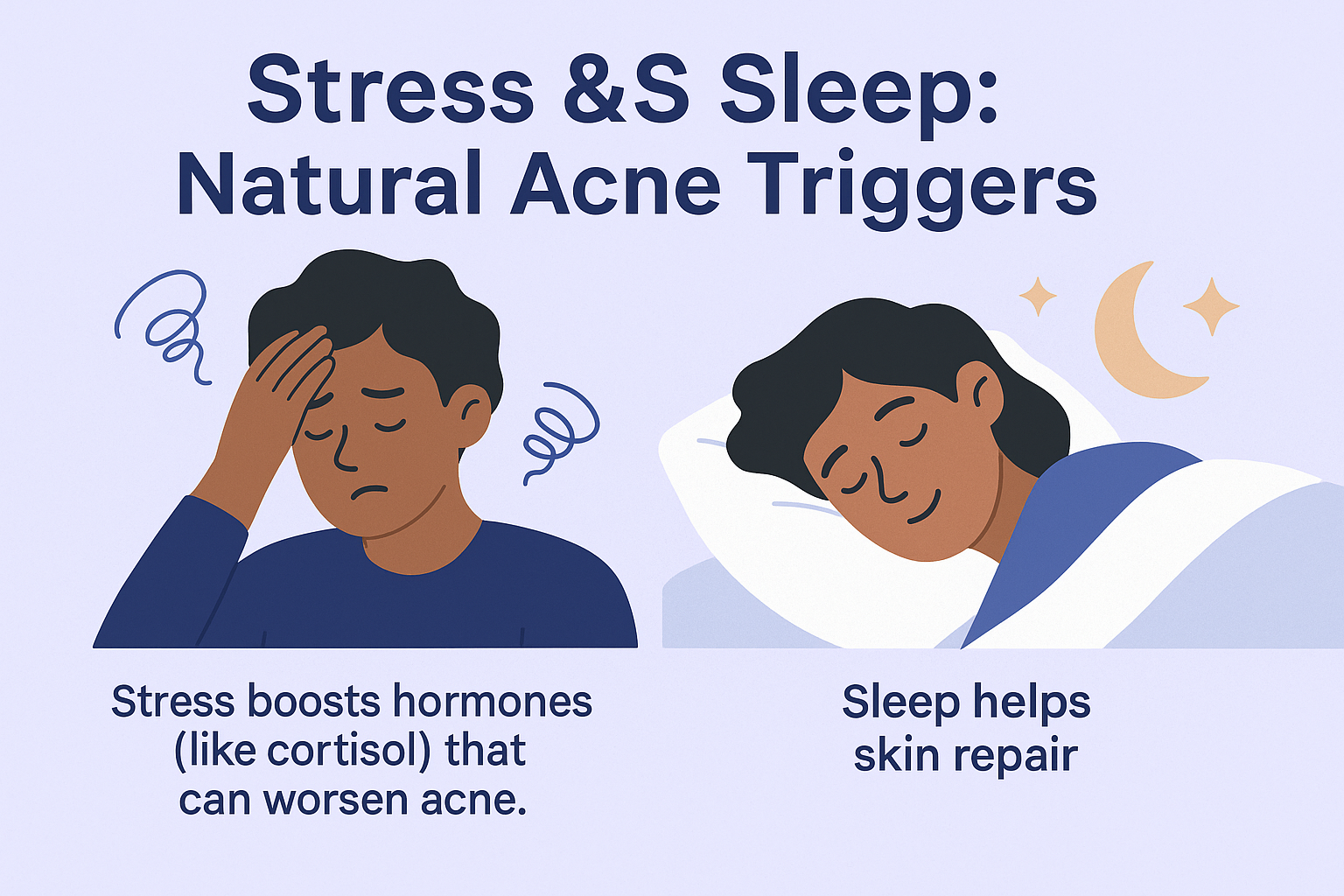
4) Stress & Sleep: Natural Acne Triggers
Stress boosts hormones (like cortisol) that can worsen acne. Sleep helps skin repair.- Aim for 7–9 hours of sleep nightly.
- Try stress-relief habits: journaling, walking, yoga, mindful breathing.
- Set a simple bedtime routine—screens off 30–60 minutes before sleep.
5) Natural Ingredients That Have Evidence
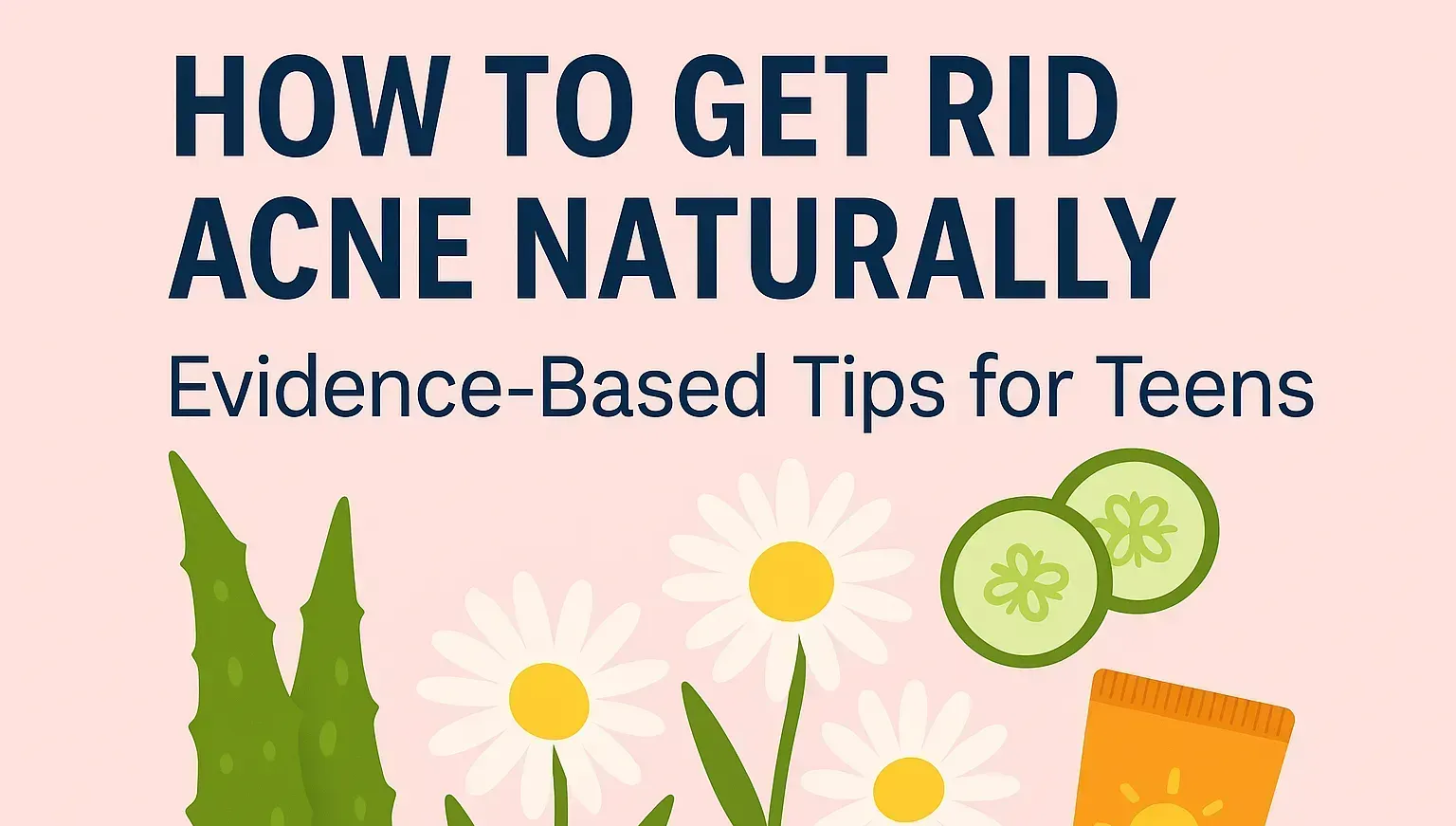
- Aloe vera: Soothes inflammation and supports healing.
- Honey: Natural antibacterial properties that may reduce acne-causing bacteria.
- Tea tree oil: Can improve mild–moderate acne—always dilute with a carrier oil and patch-test first.
- Niacinamide (Vitamin B3): Found in many gentle products; helps redness, oil balance, and barrier support.
6) Common Myths About Natural Acne Cures
- ❌ Toothpaste clears acne — It can cause irritation and chemical burns.
- ❌ Sun exposure helps acne — Temporary drying isn’t worth UV damage and dark marks.
- ❌ Washing more prevents acne — Over-cleansing strips oils and triggers more breakouts.
7) When to See a Dermatologist
See a dermatologist if acne is painful or cystic, leaving dark marks or scars, or not improving after 8–12 weeks of consistent care. Prescription options can pair well with gentle, natural routines.FAQs About Natural Acne Care
Does drinking water clear acne? Water alone won’t “cure” acne, but good hydration supports healing and overall skin function. Can diet really cause acne? Not directly, but high-glycemic foods and dairy can worsen acne in some people. Try reducing them and track your skin’s response. Are home remedies safe for teen skin? Some are, but patch-test and avoid harsh DIY acids/undiluted oils. When in doubt, ask a dermatologist.Medical disclaimer: This article is for information only and isn’t a substitute for professional medical advice. Talk to a healthcare professional for personalized care.
Read next
- The Ultimate Teen Skincare Routine: 5 Steps to Clearer Skin
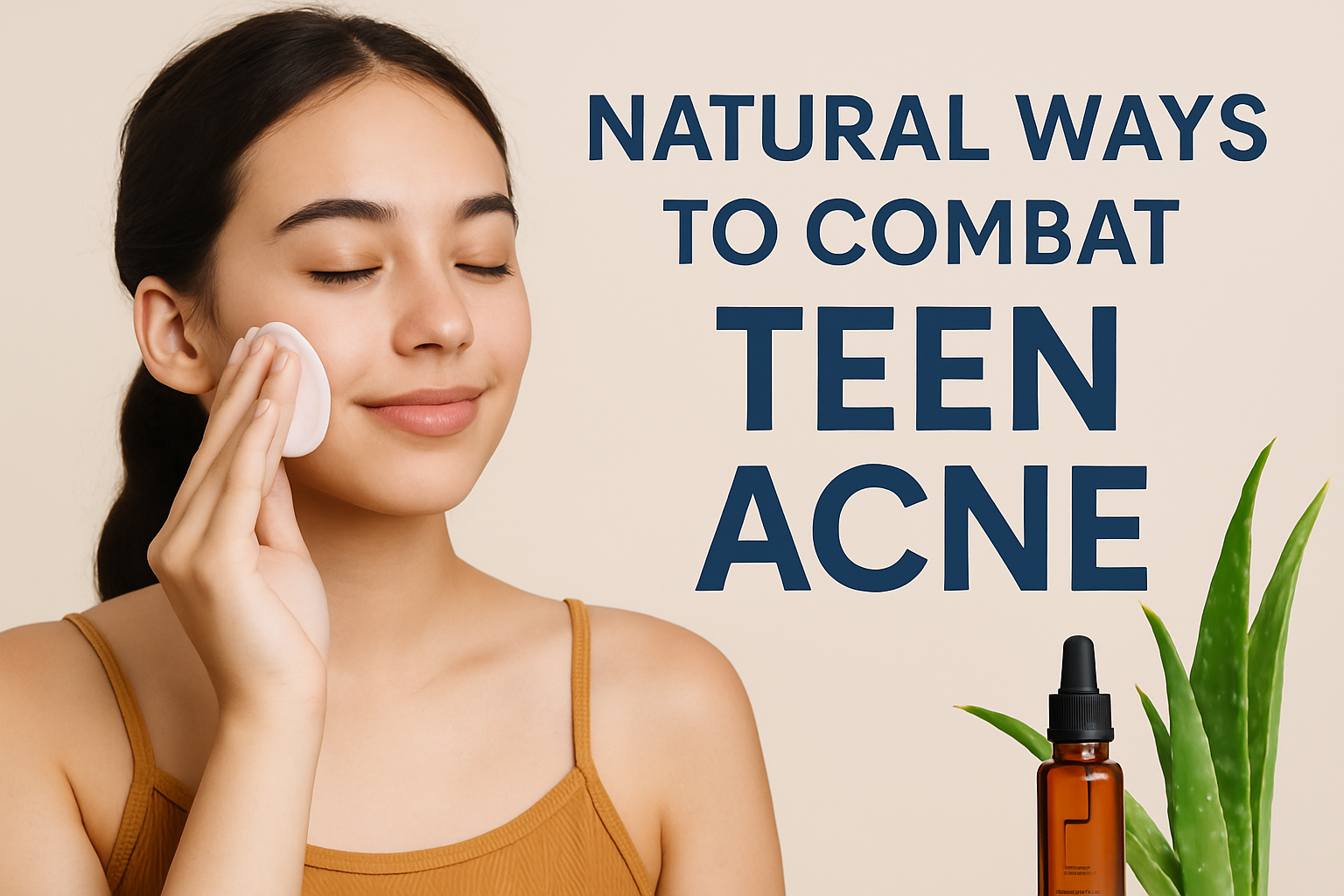
- The Truth About Acne Myths: What Really Works for Teens
📚 Related Guides
CT
ClearTeen Editorial Team
Reviewed against American Academy of Dermatology guidelines
Our content is thoroughly researched and written by our editorial team, then cross-referenced with guidelines from the American Academy of Dermatology (AAD) and peer-reviewed dermatology literature. We do not provide medical diagnoses — always consult a board-certified dermatologist for persistent skin concerns.
📚 Related Guides
CT
ClearTeen Editorial Team
Reviewed against American Academy of Dermatology guidelines
Our content is thoroughly researched and written by our editorial team, then cross-referenced with guidelines from the American Academy of Dermatology (AAD) and peer-reviewed dermatology literature. We do not provide medical diagnoses — always consult a board-certified dermatologist for persistent skin concerns.